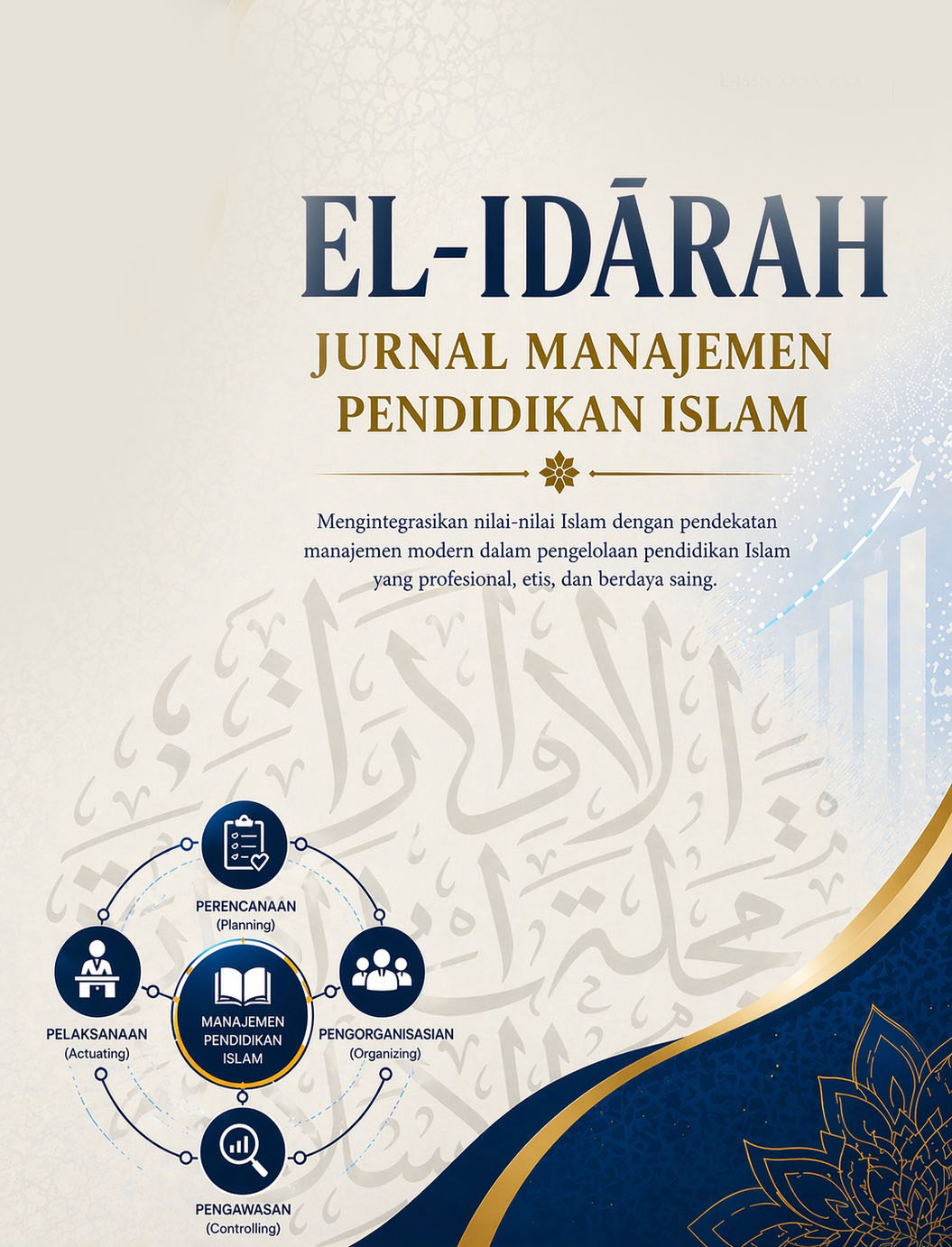
Islamic Education Management from the Hadith Perspective
Abstract
This paper explores Islamic Education Management from the Hadith perspective, defining it as the activity of organizing, directing, and integrating all educational resources in accordance with Sharia values in order to achieve educational goals optimally, effectively, and efficiently. Hadith serves as the primary reference, demonstrating that educational governance was exemplified by the Messenger of Allah through the principles of itqan (mastery) and ihsan (excellence). The ultimate objective is the formation of noble character (akhlaq) rather than merely the transfer of knowledge. The study identifies four Hadith-based management functions: planning (preparing for the future), organizing (cooperation and leadership), actuating or implementation (leadership through role modeling), and controlling or supervision (correcting mistakes and ensuring accountability). In addition, the framework of Islamic education management is grounded in the values of tauhid (monotheism), amanah (trustworthiness), ‘adalah (justice), and istiqamah (steadfastness).